
Presence is not the same as participation, and participation is not the same as power. True inclusion means creating intergenerational institutions.
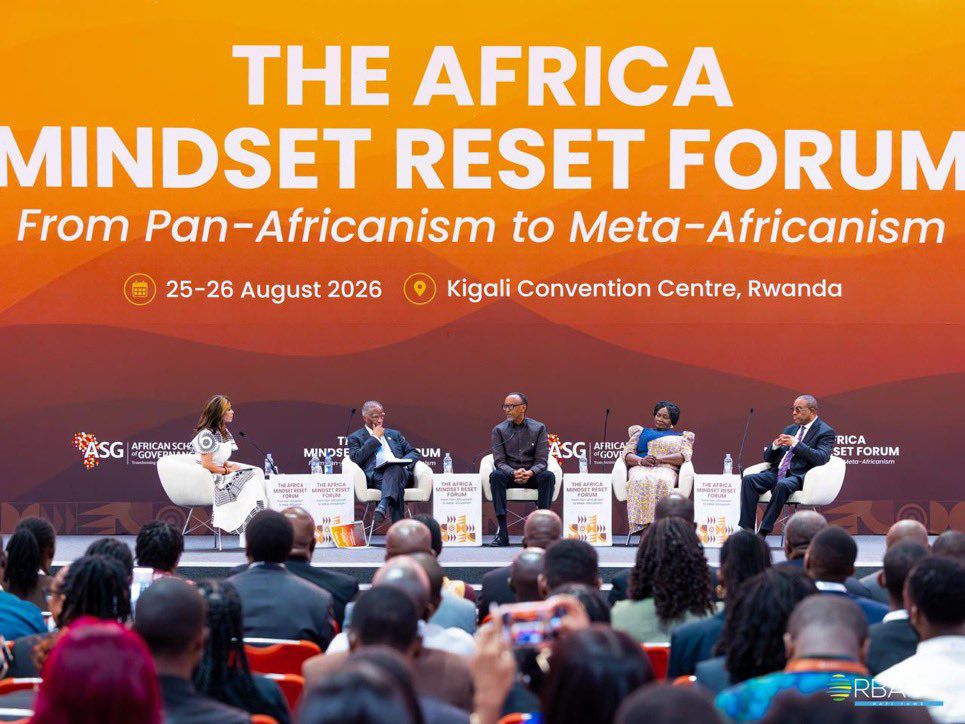
Last week, with the support of the Ellen Johnson Sirleaf Presidential Center for Women Development, I travelled to Kigali, Rwanda, to attend the Africa Mindset Reset Forum. It was a spectacularly organized gathering, bringing together some of the continent’s finest voices to inspire young Africans to believe that another Africa is possible—and, more importantly, to take responsibility for building it.
President Paul Kagame told his story and challenged young people who desire change to make a choice. Former President Thabo Mbeki shared his own journey and reminded us that transformation requires struggle and the courage to demand attention. Professor PLO Lumumba and other speakers delivered variations of the same message: build your capacity, believe in yourselves, organize and demand a seat at the table.
The room was electric. Nearly 80 percent of the participants were young people, many of whom were meeting their idols for the first time. I was inspired too. I have followed Rwanda’s story and read extensively about its transformation, so being in Kigali, surrounded by young Africans discussing the future of the continent, was a remarkable experience.
I applauded the electric speeches on the first and second days. I raised my hand several times hoping to contribute, but unfortunately, I was never recognized.
Perhaps that was fortunate.
During lunch on the second day, I sat at a table with young people from six different African countries. I had noticed some of them in the conference hall; they appeared as driven and restless as I was. I expected our conversation to be about the beauty of the summit, the speakers or the anticipation surrounding Professor PLO Lumumba’s address.
Instead, the conversation became much more revealing. They wanted more.
They wanted more time to speak in the hall and more opportunities to participate in the discussion, but beneath that was a deeper concern: they wanted their voices to matter. That conversation stayed with me because it exposed one of Africa’s greatest contradictions.
Nearly 80 percent of the people in that room were young. Across much of Africa, young people are the majority. Yet when the most consequential decisions are being made—about politics, budgets, institutions, economies, who gets invited to speak and the future of our countries—we are often missing from the rooms where those decisions happen.
We are invited to conferences, encouraged to become entrepreneurs, told to build our capacity and repeatedly reminded that we are “the leaders of tomorrow.” But tomorrow is becoming an increasingly frustrating destination for a generation that wants to participate today. There is something fundamentally wrong with asking a generation to prepare for a future over which it has so little influence. And history teaches us that this contradiction cannot continue indefinitely.
Great transformations do not begin with an explosion. They begin with an idea, followed by a growing realization that the existing order no longer reflects the aspirations of the people living under it. The independence movements that dismantled colonialism, the civil rights movements that challenged racial exclusion and the democratic movements that reshaped societies across the world were all, in different ways, responses to a widening distance between what people believed was possible and what institutions were willing to provide.
Africa may be approaching another such moment.
But the coming African revolution may not look like the revolutions of the past. It may not begin with guns or armies in the streets. It may begin with expectations.
This is perhaps the first generation of Africans that can instantly see how the rest of the world lives. Through technology, we compare governments, economies, opportunities and institutions in real time. We see what is possible, and once a generation sees what is possible, it becomes increasingly difficult to convince it that its current reality is the best it can have.
This is part of why young Africans are leaving the continent. Migration is often described as an economic decision, but it is also a question of trust. Young people are asking whether their governments can deliver the future they desire, whether their institutions will reward merit and whether their voices have any meaningful influence over the direction of their countries.
President Kagame’s message about choice therefore stayed with me. Young Africans are making choices every day. Some leave. Some become activists. Some withdraw from politics altogether. Some enter the political system. And some stay, engaging with the system every day, determined to change it from within.
The opportunity is that this generation is becoming increasingly conscious of its power and its responsibility. The danger is what happens when that consciousness encounters institutions that refuse to change.
A politically conscious, educated and ambitious young population could become the greatest force for transformation in Africa’s history. But if institutions remain closed, if young people continue to be celebrated in speeches while excluded from meaningful decision-making, that same energy could eventually become something far more difficult for governments to manage.
This is why Africa needs to move beyond the language of youth empowerment.
During our conversation at the table, one colleague made a distinction that I found particularly profound. He argued that simply putting young people in a room should not be confused with inclusion. Presence is not the same as participation, and participation is not the same as power.
True inclusion means creating intergenerational institutions in which young people have a legitimate and sustained place in decision-making. It means establishing laws, structures and political systems that ensure that young people are not invited into the room merely to decorate the conversation, but are there because their perspectives are necessary to the decisions being made.
That distinction matters.
We should not want young people in the room simply because they are young. We should want competent, prepared and credible young people in the room because they understand the realities of their generation and can contribute to decisions that will ultimately shape the future they are destined to inherit.
Another colleague at the table, a Nigerian who is himself running for political office, did not say much during our conversation. But as we walked back toward the conference hall, he pulled me aside and expressed, with extraordinary frustration, what I believe many young Africans are quietly feeling: young Africans do not simply need to be empowered; they need access to decision-making. They need political systems that recognize their numbers and institutions willing to share power with a generation that will inevitably inherit them.
His warning was blunt: if institutions continue to exclude young people, the revolution will come, and it may not be pleasant. I understood what he meant.
The young people I met in Kigali were not asking for charity. They were asking for relevance. They were not demanding that older generations disappear. They were asking to help shape the decisions they will one day inherit.
And perhaps one of the most powerful lessons came from the former President of Ethiopia, who spoke about his country’s experience of confronting difficult problems of drought. He said, policymakers did not simply designed solutions for the people affected, they co-created solutions with them. The farmers who bore the greatest consequences of the decisions were brought into the process of developing those decisions.
That principle seems obvious, yet it remains strangely absent from much of Africa’s governance.
If young people are the majority of our populations, if they are disproportionately affected by decisions about education, employment, migration, technology, climate, security and the economy, why should bringing them into the room be treated as a concession?
They are going to inherit the future anyway. There should be nothing threatening about allowing them to help build it. In fact, there is a greater danger in excluding them.
Because young people who participate in shaping institutions are more likely to defend those institutions when they inherit them. They do not arrive necessarily carrying a different agenda; they arrive with the opportunity to help forge the agenda that they will eventually be responsible for carrying forward.
That is the choice Africa faces.
We can continue to tell young people to prepare for leadership while keeping the doors of power firmly closed. Or we can recognize that generational transition is not a threat to the existing order but an opportunity to renew it.
If we choose reform, this generation could become the architects of Africa’s greatest transformation. If we refuse, history may eventually force that transformation upon us.
Because every generation eventually reaches a moment when it stops asking for permission to shape the future. I believe Africa is approaching that moment.
The question is whether our institutions will be wise enough to open the door before young Africans decide that they no longer need to knock.
This generation will either transform Africa—or eventually revolt against the Africa we refused to transform.
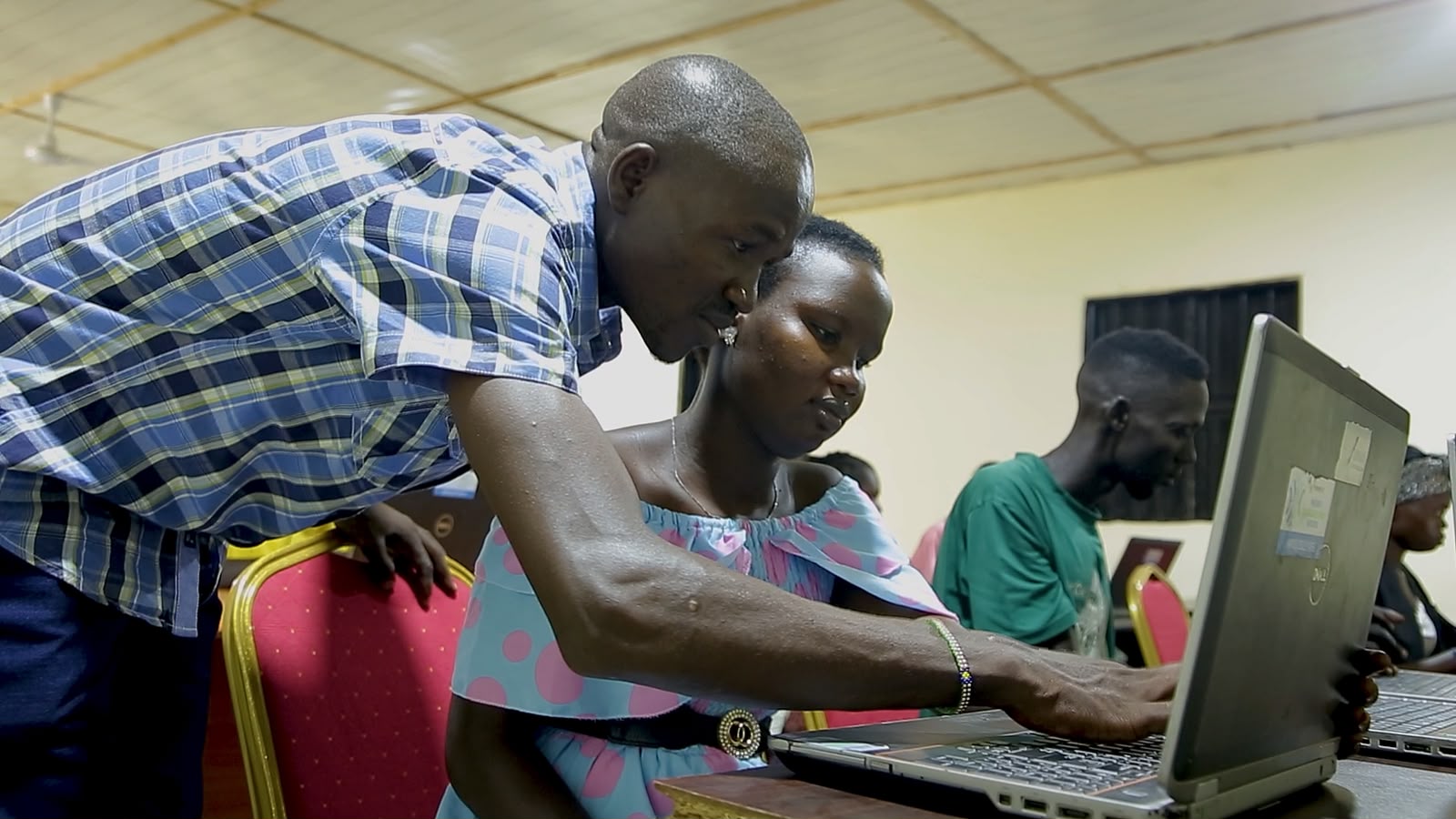

Too often, young people are celebrated for merely joining the dialogue table, yet remain excluded from the platforms where the policies being discussed are actually shaped and decisions are made.
As captured in the words of the former Ethiopian President, when the country faced a difficult climatic challenge, those at the table were not only political actors and statesmen, but also the very farmers—men and women—who ploughed and cultivated the soil.
That is an insight worth reflecting on: those most affected by a policy must not only be invited to the conversation; they must have meaningful space to influence the decisions that shape their lives and future to be inherited.