Monrovia, Liberia | November 23, 2026
The Federation of Liberian Youth (FLY) strongly condemns the failure of world leaders at the 31st United Nations Climate Change Conference (COP31) in Antalya, Türkiye, to reach agreement on the proposed Antalya Pact. The inability of governments to agree on a meaningful political outcome, particularly on fossil fuels and climate finance, exposes the deep injustice and hypocrisy at the heart of the international climate system.
For decades, the world's wealthiest industrialized nations have built their economies on the exploitation of fossil fuels and the extraction of natural resources, accumulating enormous wealth while contributing disproportionately to the climate crisis. Today, countries like Liberia, which have contributed comparatively little to global emissions, are being forced to confront devastating environmental consequences with limited financial and institutional capacity.
This injustice must end. Liberia's poverty must never become the price of the world's prosperity.
The Federation believes that the time for diplomatic expressions of concern, voluntary promises and endlessly postponed financial commitments has passed. The climate crisis requires accountability, redistribution of resources and a fundamental transformation of the global economic system. Climate finance must no longer be treated as charity or conventional development assistance. It must be recognized as an obligation arising from historical responsibility and the unequal contributions of nations to the climate crisis.
FLY therefore calls for climate reparations from wealthy industrialized countries, backed by substantial, predictable and accessible grant-based financing for vulnerable nations. The continued reliance on loans to finance climate adaptation and recovery is fundamentally unjust. Countries like Liberia should not be forced to borrow money to protect their populations against a crisis they did little to create. We demand a new international financing framework that prioritizes grants, debt cancellation and reparative financing over commercial loans and conditional lending. Liberia must never have to choose between repaying creditors and protecting its people from rising seas, flooding and environmental destruction.
The Federation is equally concerned about the contradiction between Liberia's enormous natural wealth and the persistent poverty of communities living alongside these resources. Liberia's forests provide invaluable environmental services to the world, yet the communities that protect these forests continue to struggle with limited economic opportunities, inadequate infrastructure and poverty. We reject a model of forest conservation that turns local communities into unpaid guardians of globally valuable resources while international corporations and powerful interests capture the economic benefits.
FLY demands a fundamental review of how Liberia's natural resources are governed, how concession agreements are negotiated and how environmental benefits are distributed. The protection of our forests must be accompanied by community ownership, transparent resource governance, fair benefit-sharing and meaningful participation in decisions affecting local livelihoods. International climate financing for forest conservation must deliver tangible economic benefits to the people whose lands and livelihoods sustain these resources. Liberia's natural wealth must translate into Liberian prosperity, not simply foreign profits and elite enrichment.
Beyond environmental protection, the climate transition presents an enormous economic opportunity that Liberia cannot afford to ignore. At a time when youth unemployment remains one of the country's most pressing social and economic challenges, it is unacceptable that climate action should remain confined to diplomatic negotiations, policy documents and international conferences. The transition to a sustainable economy must become a deliberate national employment and industrial development strategy.
FLY calls on the Government of Liberia to establish a National Youth Green Economy Program supported by dedicated public resources and international climate grants. Liberia must invest in renewable energy, climate-smart agriculture, waste management, recycling, sustainable forestry, biodiversity conservation and green technology. Young Liberians must not simply be trained to participate in the green economy; they must have access to financing, productive assets, technology and the opportunities to own businesses and build industries. We cannot continue to tell unemployed young people to wait for opportunities while emerging economic sectors remain underdeveloped.
The Federation also believes that climate justice must begin with the communities experiencing its consequences. From the coastal communities of West Point to vulnerable settlements in Greenville and farming communities across the country, climate change is already threatening homes, livelihoods, food security and economic survival. These communities cannot continue to feature in international conference speeches without receiving the investments necessary to protect them. Liberia needs urgent and sustained investments in coastal protection, flood prevention, early warning systems, climate-resilient infrastructure and agricultural adaptation. Climate financing must move beyond centralized institutions and complicated bureaucratic processes to reach the communities for whom it is intended.
On the question of energy, FLY supports an equitable and adequately financed transition away from fossil fuel dependency. We reject the continued political obstruction of meaningful global emissions reductions by powerful fossil fuel interests. However, the transition must not transfer the costs of decarbonization to poor countries and ordinary citizens. Liberia's energy transition must prioritize affordable electricity, local ownership, technology transfer and decent employment for young people. Expanding solar energy and decentralized electricity systems should be a national priority, particularly in underserved communities, schools, health facilities and small businesses. The green transition must not become another opportunity for foreign economic domination.
FLY further rejects the tokenistic participation of young people in international climate governance. Young people cannot continue to be invited to conferences to deliver speeches and participate in side events while being excluded from the decisions that determine climate policies, financing and implementation. We demand meaningful and institutionalized youth representation in Liberia's national climate governance architecture, including the implementation and monitoring of the country's Nationally Determined Contribution, NDC 3.0. The Government must establish a National Youth Climate Council with a clear mandate to influence national climate policy, monitor implementation and hold relevant institutions accountable. Young people must have more than ceremonial representation; they must have the power and resources to shape the decisions affecting their future.
While demanding accountability from the international community, the Federation recognizes that Liberia must also confront its own governance and implementation challenges. The Government cannot demand transparency and accountability from wealthy nations while failing to establish those same standards at home. We therefore call for the publication of a costed and publicly accessible implementation roadmap for NDC 3.0, full disclosure of climate financing received and disbursed, independent oversight of climate-related expenditure and transparent procurement processes for publicly funded climate projects. Climate commitments must be measured by their impact on ordinary Liberians, not the number of international engagements or policy documents produced.
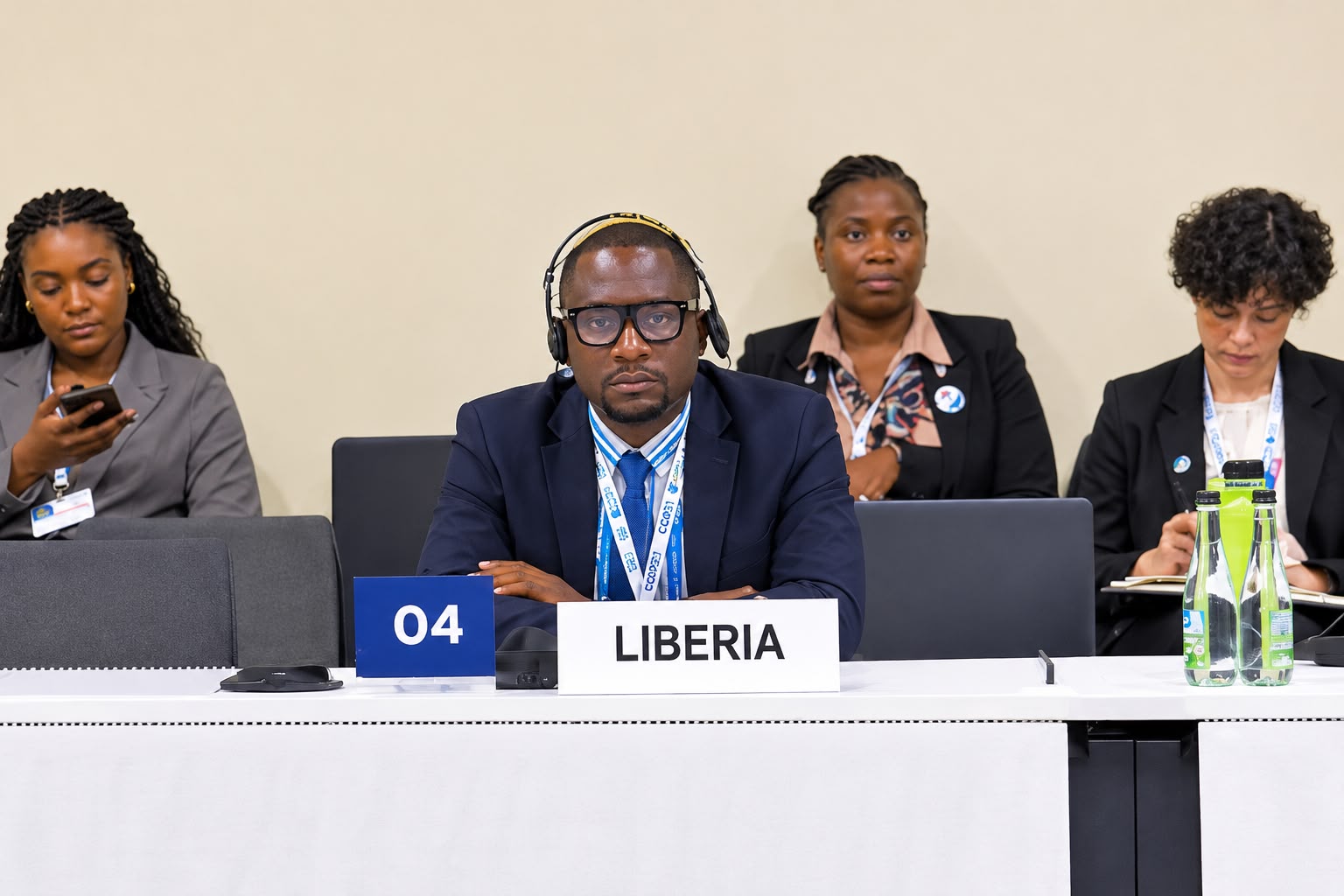
The Federation recognizes Liberia's engagement at COP31, including its advocacy for predictable climate finance, forest protection, climate-resilient infrastructure and stronger cooperation with other vulnerable countries. We encourage the Government to sustain this advocacy while ensuring that international commitments translate into measurable improvements in the lives of ordinary Liberians. Liberia must continue strengthening its alliances with African countries, the Least Developed Countries Group and other climate-vulnerable nations to demand a fairer international climate and economic system.
The failure of the Antalya Pact must not become another excuse for postponing action. The global climate crisis demands more than incremental adjustments to the existing development model. It requires a fundamental reconsideration of how wealth is produced and distributed, how natural resources are governed and who bears the costs of economic development.
Our generation refuses to inherit a world in which environmental destruction remains profitable, climate vulnerability is monetized, natural resources are exploited without fair compensation and young people are invited to participate in decisions over which they have no power.
Liberia's forests cannot continue to subsidize the world's climate ambitions while Liberian communities remain impoverished. Our young people cannot continue to be celebrated in climate speeches while being excluded from economic opportunities. Our country cannot continue borrowing to survive a crisis it did not create.
The time has come to move from climate diplomacy to climate justice, from promises to reparations, from extraction to economic sovereignty and from tokenistic youth participation to genuine youth power.
WE DID NOT CREATE THIS CRISIS. WE WILL NOT ACCEPT THE BILL FOR IT.

Leave a Comment